
New record for PET to PET 2025 balance sheet: 1.34 billion bottles processed
After a slight decline in production volume in 2024, PET to PET Recycling Österreich GmbH, based in Müllendorf in Burgenland, Austria, can look back on a successful financial year in 2025: 33,675 tonnes of PET material – equivalent to 1.34 billion PET beverage bottles – were successfully kept in the bottle-to-bottle cycle in Austria. This represents an increase of around 7% compared to the previous year (2024: 31,354 tonnes) and a new record compared to the recycling volume in 2022 (32,900 tonnes). According to Christian Strasser, Managing Director of PET to PET, the decisive factor here was the introduction of deposit-refund systems in neighbouring European countries such as Hungary and Slovakia, as well as in Austria at the beginning of last year: “The changeover led to a sharp increase in the processing volume, which, however, declined noticeably in the second half of the year. This was partly due to the reluctance of domestic consumers to buy – an observation that has already been made in other EU countries following the introduction of deposit systems. After a certain period of adjustment, we expect a return to the initial situation, as has already been the case in other markets.”
Difficult conditions for PET recycling
Despite the new recycling record, the industry is facing increasingly difficult conditions that are hindering a well-functioning circular economy in Austria: ‘There is currently a very large gap between primary and secondary raw materials again. The more cost-effective virgin material is being used more widely in Europe again. Contrary to this trend, the utilisation rates of secondary materials in Austria have been kept at a high level,’ says Strasser. Thomas Billes, Managing Director of PET to PET, adds: “An additional problem area is the increasing number of cheap imports of secondary raw materials from non-EU countries. Even though we managed to increase our processing volume in the past financial year, the sales market did not develop to the same extent. Here, we were three per cent behind the 2024 result. This circumstance led to a short-term build-up of inventory.”
In addition to stabilisation following the transition phase to the single-use deposit system, the PET to PET management expects demand for PET recyclates to rise again in 2026, as well as a substantial upward trend in Austria and Europe.
Investment measures at the company’s location
In the second half of 2025, the changes from the yellow bag and yellow bin to the deposit system also led to changes at the production site in Müllendorf. The collection of a pure beverage packaging fraction of PET bottles and cans required retrofitting in the area of detection and removal of metallic contaminants from beverage cans. High-quality metal separation was successfully put into operation both in the bottle sorting area and at the end of the washing process, where the already shredded bottle particles (flakes) are sorted again.
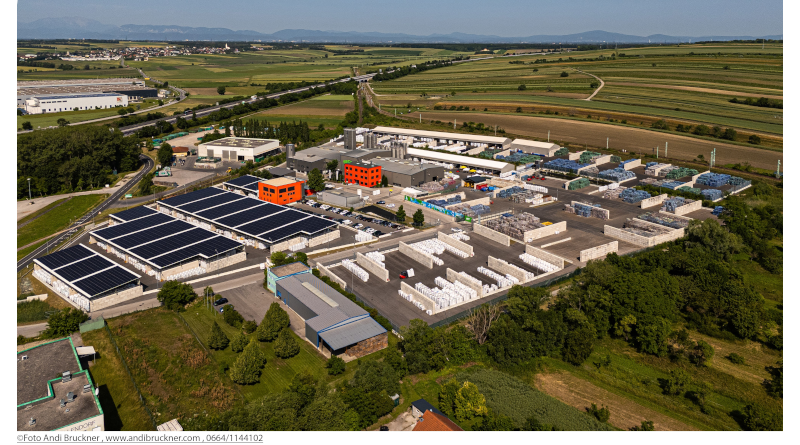
The construction of an additional 140 m³ silo created extra space for the temporary storage of PET recyclate in granulate form. In addition, an existing storage area of approx. 2,500 m² was equipped with a roof, enabling a future expansion of the already installed PV system from the current 1.2 MWp by a further 250 kWp.
PET to PET: Outlook for 2026
Further steps are planned for PET to PET in the new financial year to increase automation in the washing plant. This means that in future, the opening of the steel wire-bound bottle bales will be carried out automatically. This will improve one of the most strenuous and risky areas of work. Greater automation in plant feeding is also planned for the coming years. This should increase efficiency and competitiveness in the future and secure the future of the business in the long term.