
Optimising closure performance
Now that the implementation of tethered closures across Europe is largely complete, the PET packaging industry is entering a new and more mature phase of closure development. In recent years, cap and neck design have been driven by one regulatory requirement. The Single Use Plastics Directive forced a fundamental rethink of closure geometry, tamper-evidence systems, opening behaviour and line compatibility, with redesign, retooling and compliance programmes rolled out at speed across the entire value chain.
With this transition essentially behind us, tethered closures are no longer a future requirement but an industrial reality, already running at scale on high-speed bottling lines. Maria Jarrar, Senior Marketing Manager at RETAL, explains, “The industry focus is shifting away from these big headlines towards the demands of making these systems run efficiently, reliably and consistently in high-volume, multi-site production environments. We are also seeing wider economic pressures on beverage producers. Purchasing power is under strain in many markets, but the regulations are the same. Closures in 2026 are less about innovation and more about operational excellence, standardisation and reliability.”
Industrial reality
One of the key lessons of the tethered transition is that successful implementation is rarely about a single design choice. In practice, performance depends on the interaction between neck finish, closure geometry, tamper-evidence system, hinge behaviour and capping conditions.
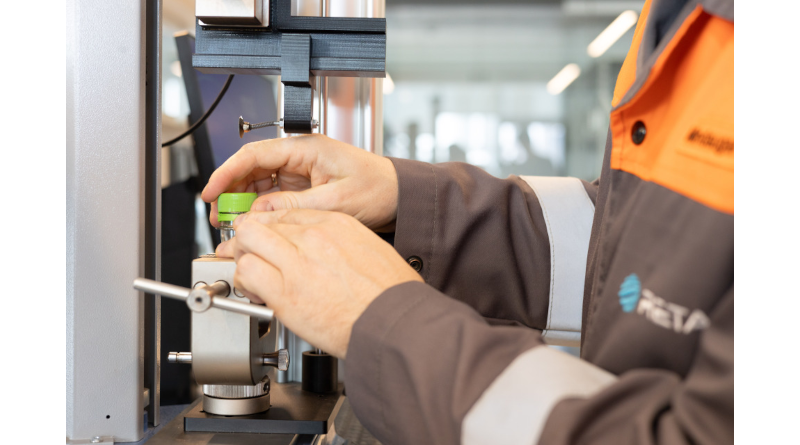
The R&D team at RETAL have many years of experience in understanding how small geometric differences have a major impact on how tethered closures behave, particularly the opening angle and stability. Head of R&D at RETAL Anton Sugoniaev says, “Sufficient space on the neck finish to ‘park’ the tethered cap is essential to ensure good consumer handling and reliable line performance. At the same time, different neck/closure combinations define very different performance in terms of allowable carbonation levels, container sizes and lightweighting potential. They determine where a given system can be used safely, how much technical margin exists in production, and how robust the solution will be in real, high-speed industrial conditions.”
Complete solutions
The Single Use Plastics Directive has got rid of the idea of a ‘default’ closure solution. Different brands, beverages and filling lines require different balances between opening behaviour, weight, carbonation performance and line compatibility, so implementation is now about matching each application with the right technical approach.
This is where truly understanding a portfolio has the chance to shine. Retals says that by industrialising multiple, fully validated tether concepts across the main neck finishes, RETAL can offer practical flexibility rather than a one-size-fits-all solution, ensuring that producers can adopt compliant closures without being forced into unnecessary technical compromises.
Progress is increasingly coming from incremental refinements to opening behaviour, tamper-evidence performance, weight efficiency and line robustness. Individually, these changes can look minor, but in a high-volume environment they really add up. A fraction of a gram saved, a small improvement in opening stability, or a modest reduction in line disruption quickly translates into significant material, energy and cost effects when multiplied across hundreds of millions or billions of units.
At the same time, supply conditions remain complex and not always predictable. In this context, the ability to balance production across multiple sites, qualify alternatives and adapt formats without disrupting customers has become a practical necessity rather than a strategic luxury.
From implementation to optimisation
The next chapter in closure development is less about dramatic change and more about industrial maturity. Following the regulation and implementation, the challenge now is to ensure these systems run smoothly, efficiently and reliably, refining them based on real production experience. Having already navigated this transition, RETAL is using this phase to apply those lessons in targeted way, helping customers fine tune production lines, improve stability and stay ahead of the next wave of regulatory and operational requirements.